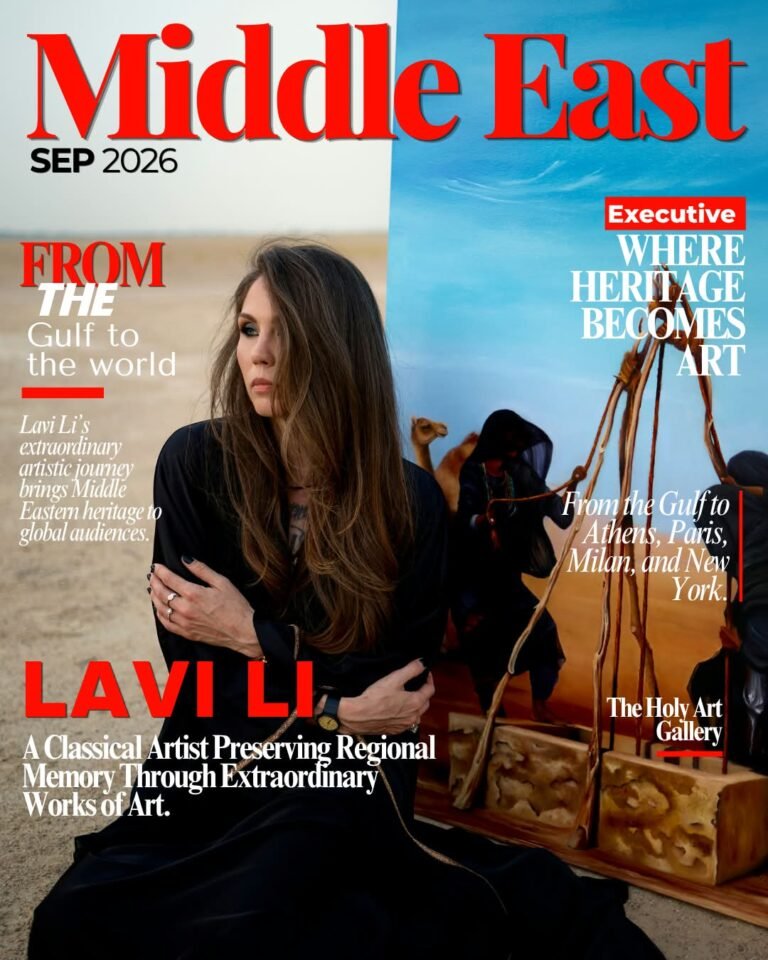
In an era defined by speed, digital consumption, and constantly changing visual trends, Lavi Li has chosen a profoundly different path. Her art is rooted in patience, observation, craftsmanship, and an enduring commitment to preserving the emotional weight of human experience.
A deeply educated painter with a command of multi-layered oil techniques inspired by the tradition of the Old Masters, Lavi has developed a distinctive artistic language through years of disciplined practice and immersive research. Her relationship with the Middle East became particularly transformative after spending two years conducting extensive field research expeditions across remote historical settlements and landscapes in Oman and the United Arab Emirates.
Rather than simply documenting what she encountered, Lavi immersed herself in local communities, observing traditional lifestyles, architecture, landscapes, rituals, and human relationships. These experiences became the foundation for paintings that approach Middle Eastern heritage not as something frozen in the past, but as a living, evolving presence.
Today, her work is entering a significant international chapter through the “Evidences of Life” World Art Tour, presented under the patronage of The Holy Art Gallery, creating an artistic bridge between Middle Eastern heritage and major global art destinations.
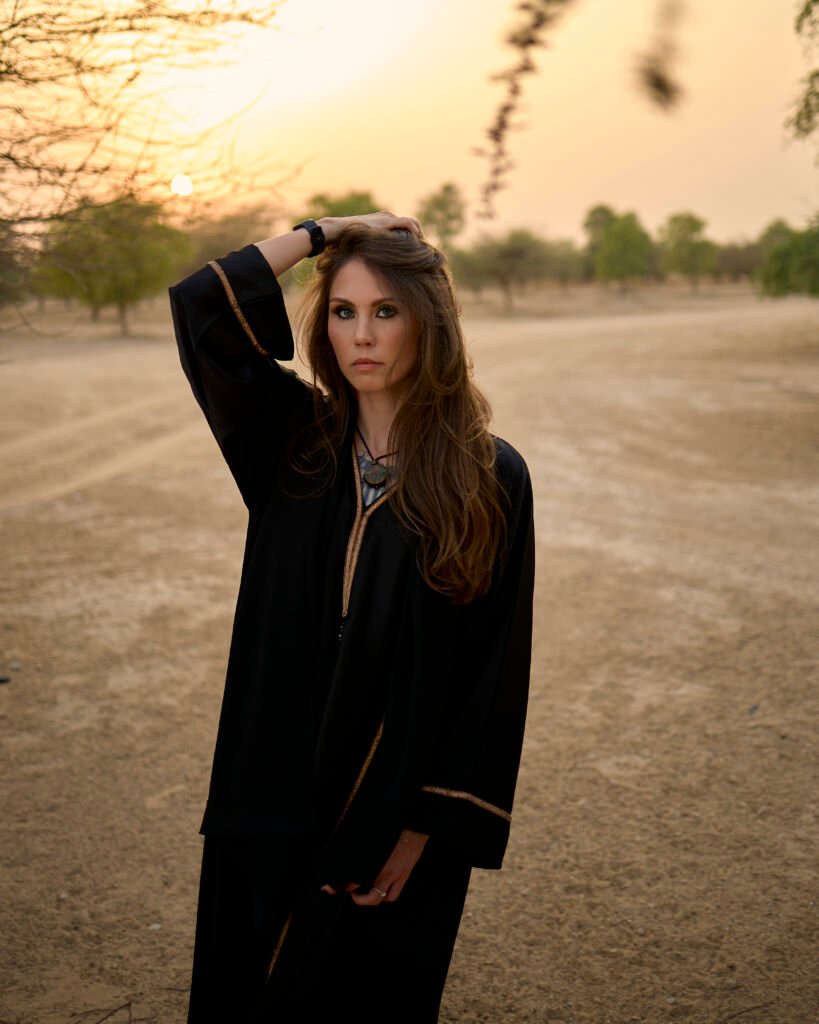
A Journey Rooted in Immersive Research
Lavi’s connection to the Gulf is defined by an unusually intimate approach to artistic research. Her two-year journey through Oman and the UAE allowed her to move beyond conventional representations of the region and engage directly with the people and environments that give its heritage meaning.
Living alongside local communities gave her the opportunity to experience traditional life from within rather than simply observing it from a distance. Ancient settlements, desert landscapes, irrigation systems, architecture, and the stories carried through generations became essential elements of her visual vocabulary.
This process helped Lavi explore the relationship between place and memory. Her paintings frequently consider how human presence becomes embedded in architecture and landscape, and how seemingly ordinary moments can carry extraordinary cultural significance.
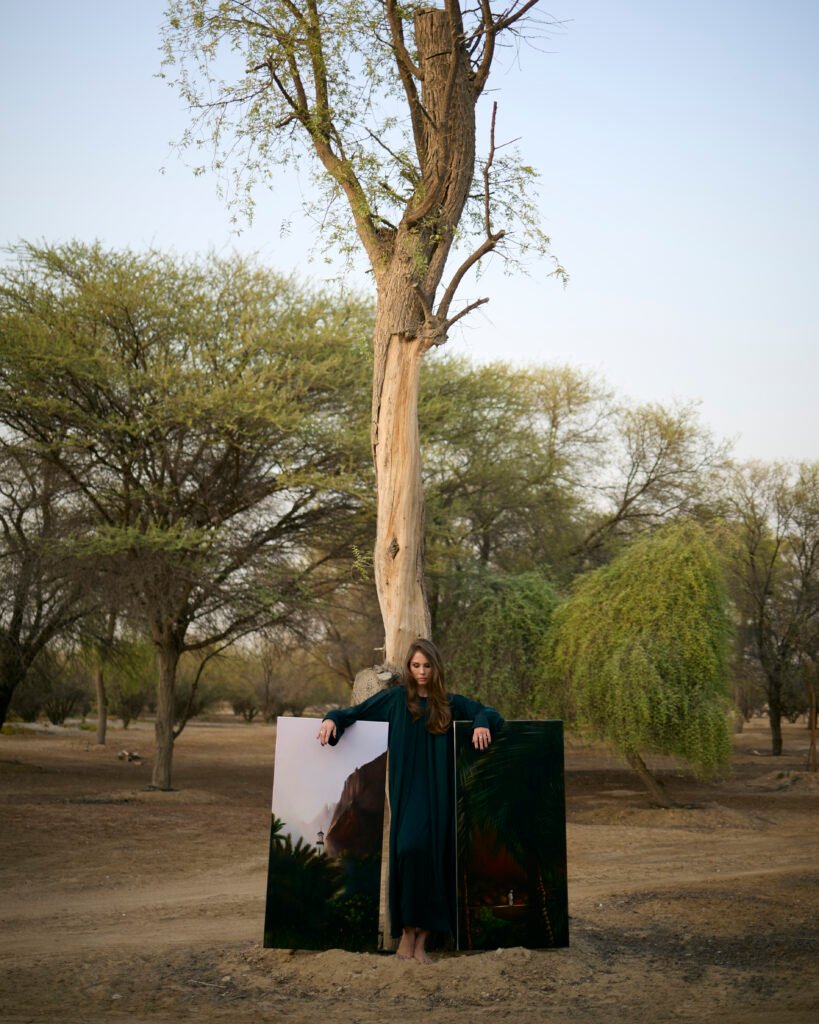
Her approach is particularly visible in works such as The Straight Path, which depicts an elder walking beside a stone falaj at dawn. The painting captures more than a solitary figure and an ancient irrigation channel; it evokes continuity, time, tradition, and the quiet dignity of a culture carried forward through generations.
A Defining Solo Exhibition in Abu Dhabi
A major milestone in Lavi’s regional artistic journey came with her solo exhibition at Diba Art Gallery in Abu Dhabi.
The exhibition represented the culmination of her extensive field research across Oman and the UAE. Its atmospheric narrative paintings reflected the depth of her engagement with the region and demonstrated how classical painting techniques could be used to communicate contemporary cultural stories.
Her tactile and deeply considered treatment of regional identity earned significant appreciation, reinforcing her position within the Gulf’s growing contemporary art ecosystem.
The success of the Abu Dhabi exhibition has paved the way for another important chapter: an upcoming solo exhibition at Warehouse Gallery in Dubai, where Lavi will present new monumental canvases continuing her exploration of the region’s living history.
These larger works promise to expand the visual scale of her practice while maintaining the slow, meticulous methodology that defines her artistic philosophy.
Building Artistic Bridges Between Cultures
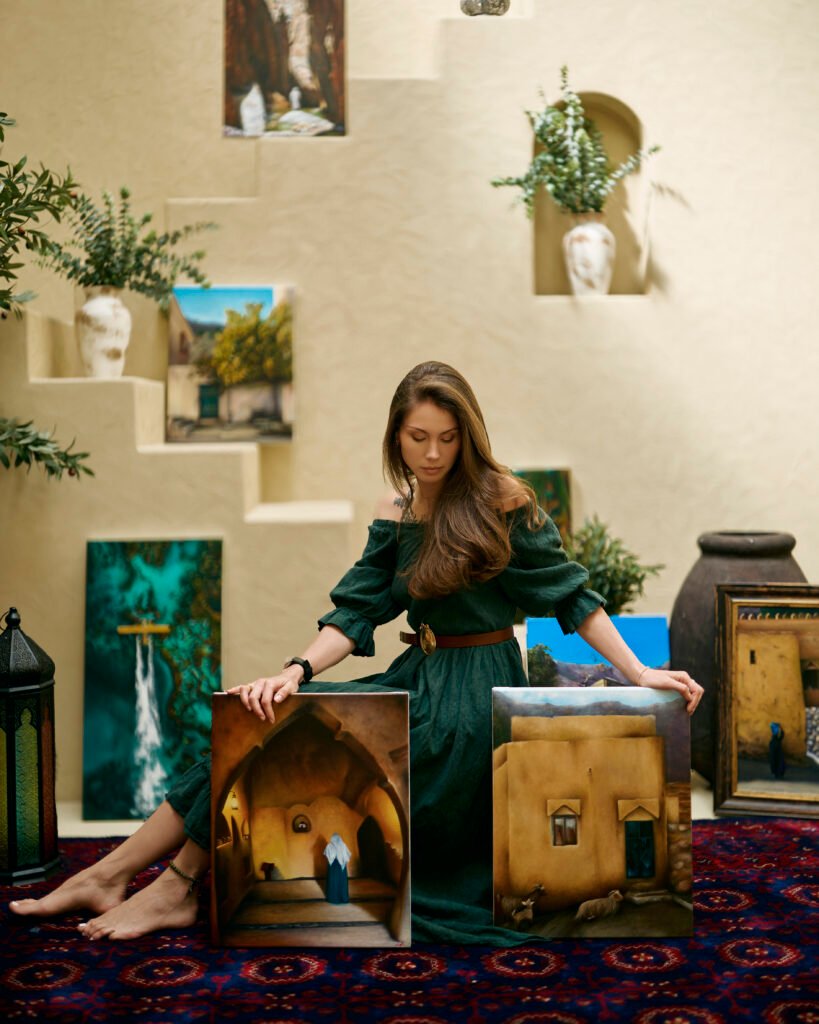
Lavi’s contribution to Middle Eastern art extends beyond exhibitions. Her practice has increasingly become part of broader cultural initiatives designed to create meaningful artistic dialogue between regions.
Through the Ali Bey Art Bridge initiative, she serves as a guest artist and flagship representative of transcultural projects connecting the Middle East and Europe.
One of the most significant upcoming projects associated with this collaboration is a solo exhibition in Spain featuring 12 large-format oil paintings. The works are being created to introduce European audiences to the cultural richness of Oman and the wider Gulf.
For Lavi, such exhibitions are more than opportunities for international recognition. They represent a chance to challenge simplified perceptions of the Middle East and reveal the complexity, beauty, history, and humanity that exist within the region.
Art becomes the bridge—one capable of communicating cultural stories without requiring translation.
Expanding Her International Reach Through PLOGIX Gallery
Lavi has also strengthened her international presence through a successful one-year collaboration with PLOGIX Gallery.
The collaboration provided an important platform for presenting her classical technique and Middle Eastern subject matter to an increasingly international audience of collectors, art historians, and digital art communities.
At the center of this relationship is the contrast between Lavi’s traditional methodology and the contemporary mechanisms through which art is discovered and shared today.
Her paintings may require months of physical labor, yet digital platforms can introduce those works to audiences thousands of miles away. This intersection between traditional craftsmanship and modern global accessibility has become an important part of her growing artistic identity.
Supporting the Regional Art Ecosystem
Lavi’s commitment to the Middle East is not limited to representing the region internationally. She is equally invested in strengthening the creative ecosystem within it.
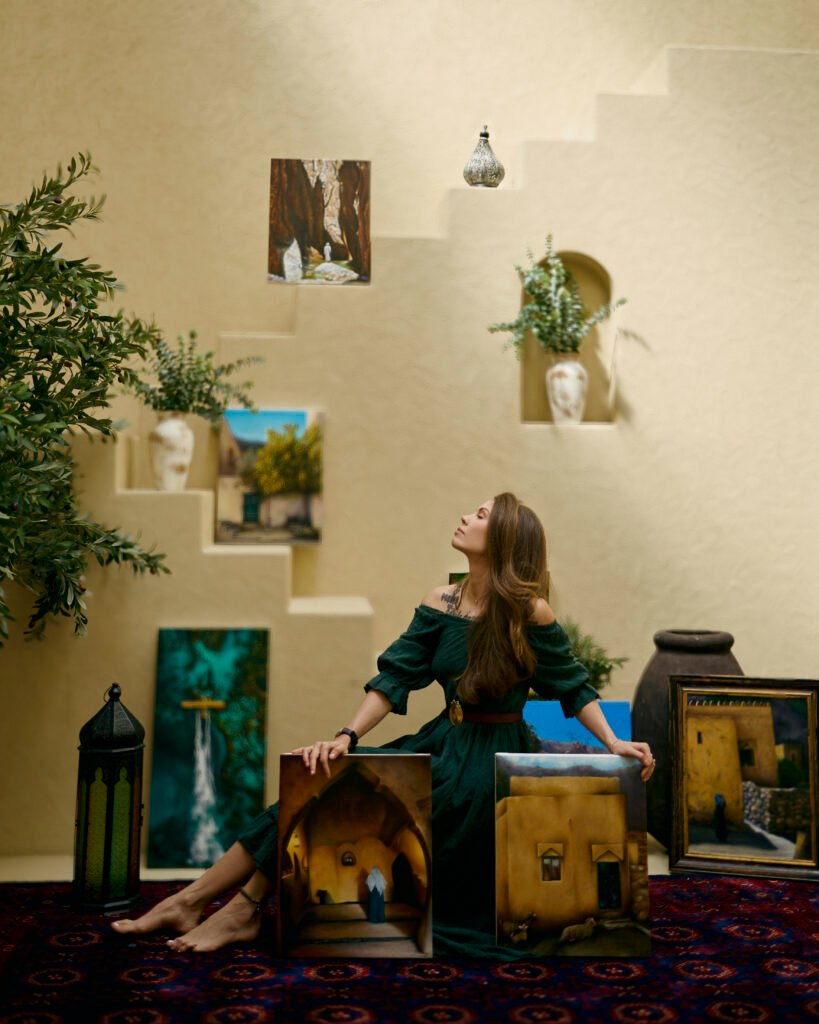
As a core contributor and lecturer for District (District1795), she participates in an educational and artistic platform focused on empowering artists, encouraging critical dialogue, and connecting traditional craftsmanship with contemporary artistic strategies.
Through lectures and educational engagement, Lavi shares her knowledge of painting techniques, narrative construction, and classical methodologies.
Her involvement reflects an important dimension of her practice: the belief that artistic development is not only about individual achievement but also about contributing to the growth of the wider creative community.
By sharing technical knowledge and encouraging deeper conversations around artistic practice, she helps emerging and established artists explore how tradition can remain relevant in a rapidly changing creative environment.
The Philosophy of Slowness
Perhaps the most distinctive aspect of Lavi’s work is her deliberate rejection of speed.
In a culture increasingly shaped by instant content and rapidly consumed imagery, she has developed what can be described as a philosophy of slowness.
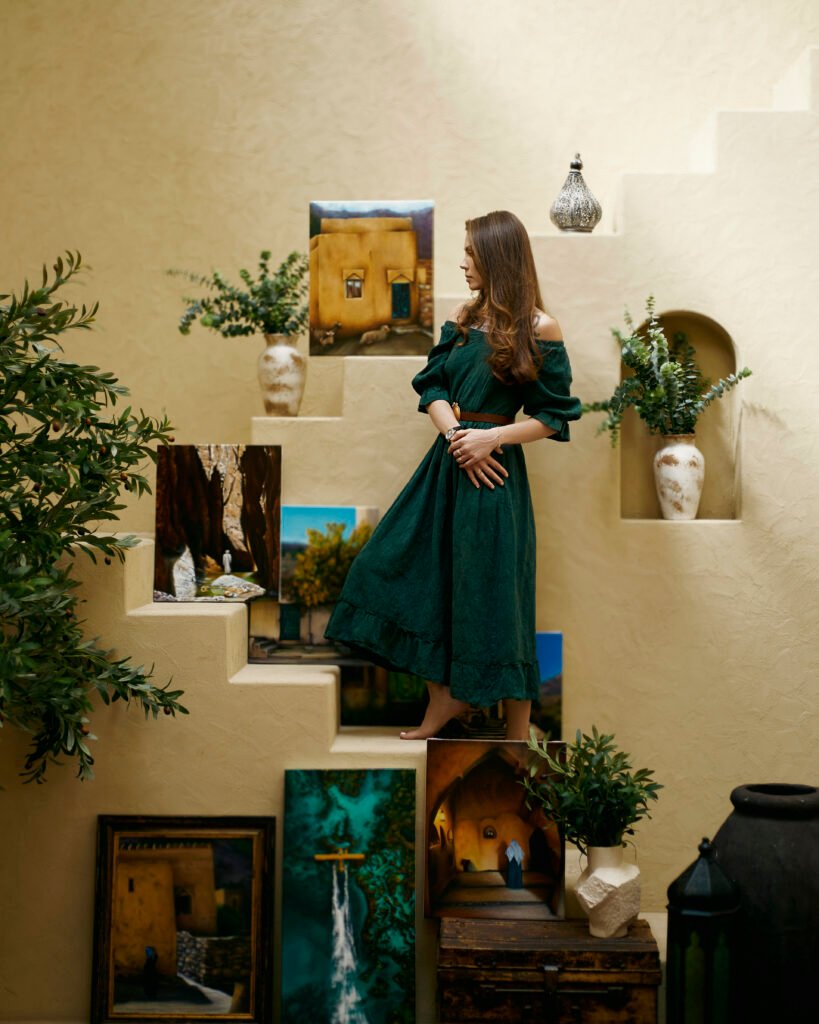
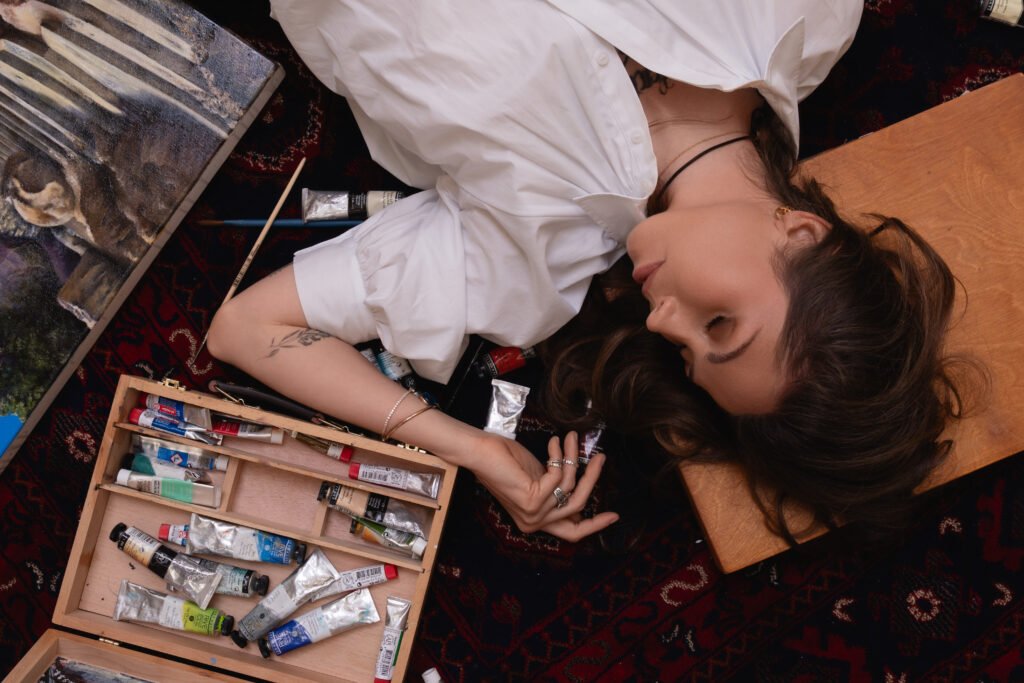
Her paintings are created using classical, multi-layered oil techniques, with individual canvases taking anywhere from two to eight months to complete.
For Lavi, this extended process is not simply a technical requirement. It is part of the meaning of the work itself.
Painting becomes a physical act of devotion—one that allows her to observe, build, revise, and preserve each detail layer by layer.
Her work seeks to capture real human presence, architectural memory, and the gradual transformation of nature. The resulting paintings become records of moments that might otherwise disappear.
The Middle East, with its ancient traditions and rapidly developing modern landscapes, offers a particularly powerful environment for this philosophy.
Why the Middle East Became Her Inspiration
Lavi describes the Middle East as a place of extraordinary visual and cultural richness.
Its distinctive light, ancient landscapes, oral traditions, historic settlements, and enduring hospitality have all influenced the direction of her work.
Among the elements that particularly inspire her are the dawn light surrounding ancient aflaj irrigation channels and the traditions preserved within remote mountain communities.
For Lavi, the region’s history is not confined to museums or archaeological sites. It remains visible in everyday life—in the gestures of elders, the character of traditional architecture, the landscapes surrounding communities, and the stories passed between generations.
This perspective has shaped the emotional foundation of her work.
Rather than treating heritage as something static, she presents it as something alive: continuously remembered, experienced, interpreted, and passed forward.
“Evidences of Life” Takes the Middle East Global
Lavi’s international journey now reaches a defining moment with the “Evidences of Life” World Art Tour, presented under the patronage of The Holy Art Gallery.
The series will be showcased across major international art destinations, including:
- Athens
- Paris
- Milan
- New York
The tour represents a significant opportunity to place the cultural landscapes and human stories of Oman and the UAE within global fine-art conversations.
At the heart of Evidences of Life is Lavi’s desire to preserve moments of human existence that are both deeply personal and culturally significant.
Her work asks viewers to slow down and look carefully—to notice the relationship between people and place, between memory and architecture, and between historical continuity and contemporary change.
Representing the Middle East Through Fine Art
Bringing Middle Eastern heritage to international audiences carries particular significance for Lavi.
Her paintings offer an alternative to fleeting representations of the region. Instead of focusing solely on modern skylines, rapid development, or familiar visual symbols, she turns her attention toward the quieter dimensions of cultural identity.
Ancient irrigation systems, traditional communities, natural landscapes, aging architecture, and individual human figures become entry points into a much larger conversation about history and belonging.
By presenting these subjects through the discipline of classical oil painting, Lavi creates a dialogue between centuries.
The Old Master tradition becomes a vehicle for contemporary cultural storytelling, while the landscapes and people of the Gulf provide the emotional substance of the work.
An Artist Building Bridges Through Time
With an upcoming solo exhibition at Dubai’s Warehouse Gallery, continued educational contributions through District, international collaboration through Ali Bey Art Bridge, and the global Evidences of Life tour with The Holy Art Gallery, Lavi Li is entering an important new phase of her career.
Her journey demonstrates that Middle Eastern heritage can occupy a powerful place within the global fine-art landscape—not simply as a subject to be observed, but as a source of sophisticated artistic dialogue.
Through patience, research, classical craftsmanship, and cultural immersion, Lavi has developed a practice dedicated to preserving what is fleeting and illuminating what is often overlooked.
Her paintings invite audiences to pause, observe, and connect.
In doing so, Lavi Li transforms art into more than an image. It becomes a bridge between generations, cultures, landscapes, and continents—carrying the living stories of the Middle East onto the global stage.