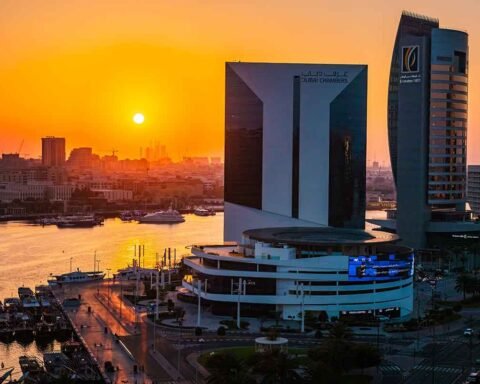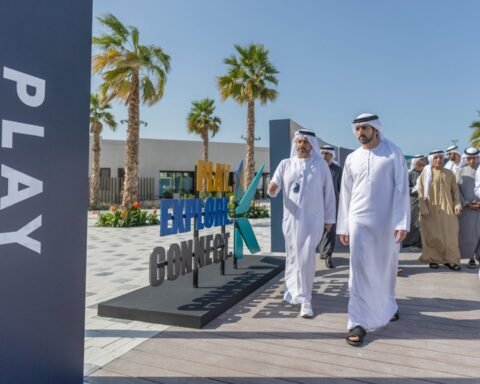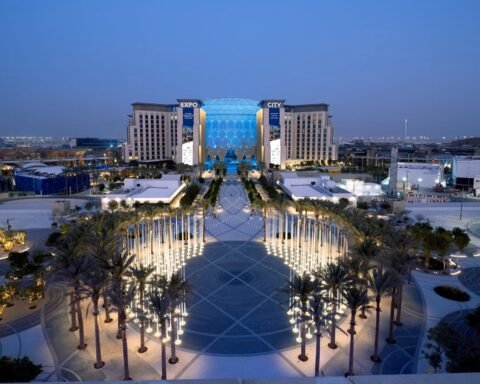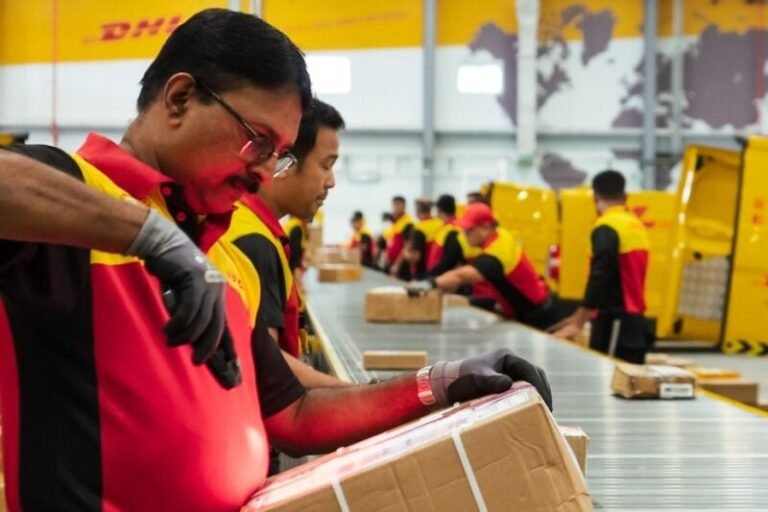
With a strategic focus on the UAE and Saudi Arabia, DHL’s ambitious investment will enhance express delivery, supply chain resilience, and green logistics as the Middle East becomes a global trade hub.
DHL Commits €500M to Transform Middle East Logistics by 2030
In a bold move to align with shifting global trade patterns, DHL Group has announced a €500 million ($540 million) investment across the Middle East through 2030. This landmark initiative will focus primarily on high-growth markets such as the UAE and Saudi Arabia and aims to supercharge the region’s logistics infrastructure, expand operational capacity, and elevate service excellence.
The investment will span all four of DHL’s major business units — DHL Express, DHL Global Forwarding, DHL Supply Chain, and DHL eCommerce — reinforcing its long-term commitment to driving innovation and agility in one of the world’s most dynamic trade corridors.
“The Gulf Cooperation Council is rapidly emerging as a global logistics and innovation hub,” said John Pearson, CEO of DHL Express. “Our investment reflects the region’s increasing importance in connecting Asia, Europe, and Africa, and our commitment to supporting its transformation into a global trade catalyst.”
Empowering Trade, Resilience, and Digital Growth
The Middle East’s rise as a key link between global markets is being powered by foreign direct investment, government-led infrastructure projects, and export-oriented growth by local enterprises. DHL’s Strategy 2030 is designed to harness this momentum.
The investment will enhance a wide array of logistics services, including express parcel delivery, freight forwarding, warehousing and fulfillment, customs brokerage, and sector-specific logistics tailored to life sciences, healthcare, e-commerce, and energy.
“With our contract logistics expertise, we aim to drive innovation in key industries such as energy, healthcare, and technology,” said Hendrik Venter, CEO of DHL Supply Chain for Europe, Middle East & Africa.
Amadou Diallo, CEO of DHL Global Forwarding, Middle East & Africa, emphasized the importance of digital innovation and sustainability in DHL’s roadmap.
“This investment reinforces our confidence in the region’s economic trajectory. Our goal is to stay ahead in digital capabilities and sustainable transportation, helping customers build resilience and unlock growth in an uncertain world.”
Strategic Initiatives Underway
DHL outlined a comprehensive plan under its €500M regional commitment:
- DHL Express: Investment in new hubs and gateways, increased aviation capacity to improve speed and network performance.
- DHL Global Forwarding: Fleet expansion, including electric trucks, and multimodal enhancements via joint ventures such as one with Etihad Rail.
- DHL Supply Chain: Scaling warehouse capacity and automation in the UAE and Saudi Arabia to support smarter, tech-enabled fulfillment.
- DHL eCommerce: Strengthening last-mile capabilities, boosted by its acquisition of AJEX in Saudi Arabia, to meet skyrocketing e-commerce demand.
Driving Sustainability in a Fast-Changing Region
Aligned with the UAE’s and Saudi Arabia’s climate goals, DHL has earmarked part of its investment for green logistics initiatives. These include solar-powered logistics facilities, sustainable aviation fuels, electric vehicles, and other alternative fuel technologies.
DHL’s green initiatives aim to support customers in reducing their carbon footprint while ensuring their supply chains remain competitive and resilient.
The group’s investment strategy also includes support for tourism-related logistics, particularly in Saudi Arabia, where high-end inbound B2C demand is on the rise as part of the kingdom’s Vision 2030 and growing slate of global events.
Conclusion
With this expansive, multi-pronged investment, DHL is not just scaling operations — it’s redefining the logistics landscape in the Middle East. As the region cements its status as a central trade artery connecting continents, DHL’s enhanced infrastructure, digital innovation, and sustainable practices are poised to play a pivotal role in shaping the future of global supply chains.