Driven by bold national visions, soaring inbound tourism, and robust investments in aviation, business, and sports, the region is poised to become a global powerhouse in travel and hospitality.
The Middle East is on the cusp of a transformative leap in travel and tourism, with spending projected to surge by 50% to nearly $350 billion by 2030. This remarkable growth, highlighted in the newly released ATM Travel Trends Report 2025 by Arabian Travel Market in collaboration with Tourism Economics, signals the region’s rapid evolution into one of the world’s most dynamic travel hubs.
According to the report, annual travel growth in the Middle East will average over 7% through 2030, significantly outpacing global benchmarks. Inbound travel alone is forecast to grow at a striking 13% annually between 2025 and 2030, fueled by rising demand from Asia, Africa, and Europe, particularly the UK and India.
“Travel growth in the Middle East is incredibly strong,” said Danielle Curtis, Exhibition Director ME at Arabian Travel Market. “Bold national visions, game-changing developments, and enhanced connectivity are key drivers behind this upward trajectory.”
Surpassing Pre-Pandemic Benchmarks
The region’s travel expenditure is expected to exceed pre-pandemic levels by 54% in 2024, marking a swift and sustained rebound. Business travel, in particular, is emerging as a critical engine of growth. With an expansion rate 1.5 times higher than the global average, the Middle East is on track to become the second-fastest growing region for business tourism globally.
Aviation Ambitions Taking Flight
A key enabler of this growth is the region’s expanding aviation ecosystem. Regional giants including Emirates, Etihad Airways, Qatar Airways, and Saudia have placed a combined 780 aircraft orders with Boeing and Airbus, demonstrating robust long-term confidence and strategic investment in connectivity.
A Rising Hub for Luxury and High-Spend Tourism
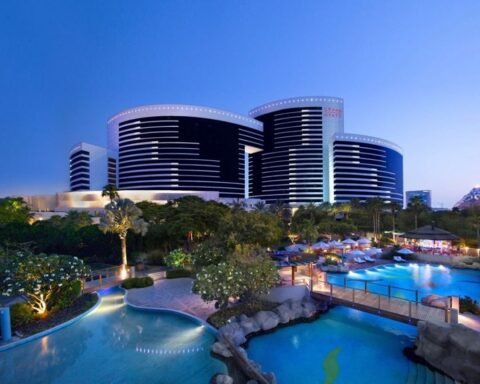
Luxury tourism continues to play a pivotal role in shaping the Middle East’s global appeal. Abu Dhabi and Dubai alone host nearly 100 of the region’s 170 luxury hotels, with many more under development across Saudi Arabia’s mega projects.
Notably, the report reveals that almost 60% of Middle Eastern visitors spend on luxury experiences, compared to less than 40% worldwide. This points to a discerning, high-net-worth clientele drawn to the region’s curated experiences, exceptional hospitality, and premium cultural offerings.
“Travellers drawn to the Middle East tend to spend more overall,” said Curtis, citing premium events and bespoke experiences as key magnets for affluent tourists.
Sports Tourism on the Rise
Sporting events are also fueling the region’s tourism boom. Following the success of Qatar’s 2022 FIFA World Cup and Dubai Expo 2020, sports-related travel is expected to grow by 63%, with Saudi Arabia’s hosting of the 2034 FIFA World Cup set to further amplify this trajectory.
Investment and interest are soaring in a wide array of sports — from football, golf, and motorsports to cycling and esports — positioning the Middle East as a vibrant destination for sports tourism.
As the Middle East harnesses its strategic location, cultural heritage, and visionary development plans, it is set to redefine the future of global travel. With luxury, business, and sports tourism converging, the region is not only rebounding but leading a new era in global hospitality and travel innovation.